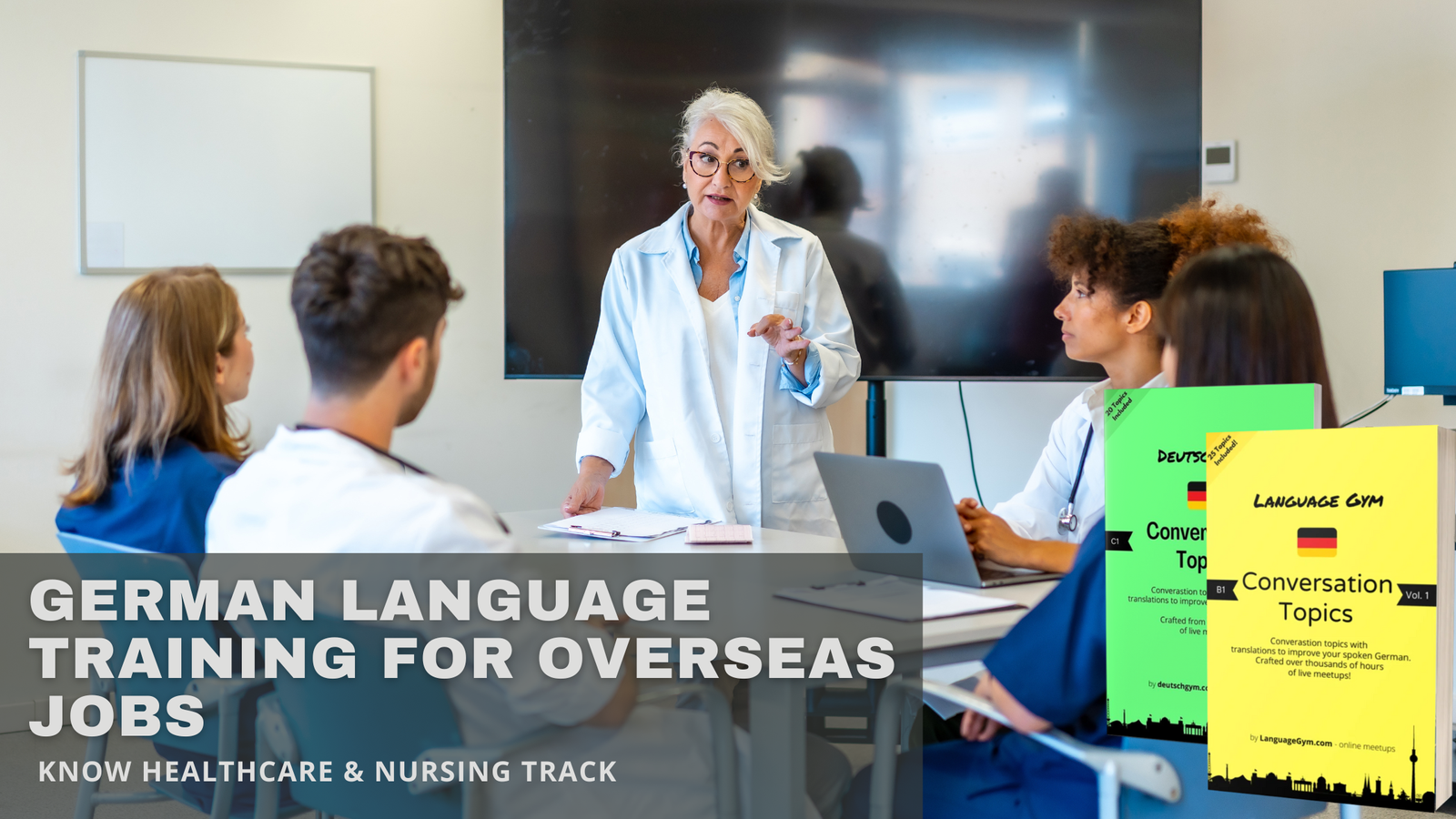
German Language Training for Overseas Jobs: I see the global demand, for healthcare professionals rising fast. I have spoken with nurses and healthcare workers who want to move to Germany. Germany is now a destination for nurses and healthcare workers. Germany offers jobs for nurses and healthcare workers.. A key requirement blocks the path, for nurses and healthcare workers. The key requirement is language proficiency. German language proficiency is needed to work in Germany.
I know German language training, for jobs has become essential. German language training helps professionals, in the healthcare and nursing sector. German language training prepares professionals who plan to work in Germany. German language training matters.
🌍 Why Germany needs healthcare professionals.
I see why Germany needs healthcare professionals. Germany needs healthcare professionals to keep the hospitals open. The patients cared for. Healthcare professionals are needed in Germany because the population is getting older and the demand, for care is rising. Germany needs healthcare professionals to sustain the health system.
I notice that Germany has a shortage of healthcare workers. The shortage comes from an aging population and, from rising demand, for services. I see that the German government looks for help. I see that the German government recruits nurses and healthcare professionals through organized migration programs to try to fill the gap.
Professionals need communication skills to work legally and safely in Germany. German language training, for jobs meets the need, for communication skills and helps professionals get the right paperwork. That is why the step matters. I have seen many professionals succeed after taking German language training.
Read More: B1 Speaking Topics: How to Answer Them with Sample Answers
🏥 Why German Language Is Mandatory for Healthcare Jobs
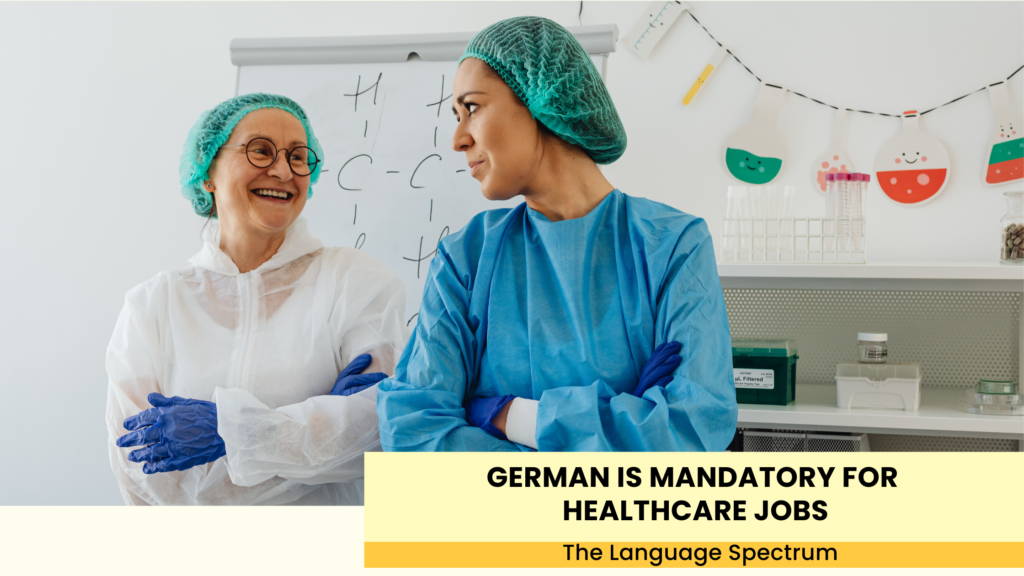
I see healthcare workers talk to patients doctors and the hospital system each day. I see that the healthcare workers need communication, for safety for ethics and, for quality care. Clear communication matters.
Most German employers require:
B1 level German – for entry into training or adaptation programs
B2 level German – for full professional recognition and employment
I have seen that, without German language training professional integration is very hard. The lack of German language training blocks integration. If you want integration you need German language training.
I found that the German language training, for jobs shows you what you learn. The German language training helps you.
I have put together a course, for healthcare that includes:
✔ Medical Vocabulary
Body parts
Symptoms and diagnosis
Medication and treatment terms
✔ Patient Communication
Asking medical questions
Giving instructions
Explaining procedures
✔ The workplace communication improves the workplace communication.
Speaking with doctors and staff
Writing reports and documentation
✔ Cultural & Professional Etiquette
Professional communication standards
Workplace ethics in German healthcare
The specialized approach ensures a transition, into the healthcare system.

🩺 Career Pathways After German Language Training
I have seen that when a healthcare professional has certification that healthcare professional can take on roles such, as:
Registered Nurse
Geriatric Caregiver
Hospital Assistant
Rehabilitation Support Staff
The roles often come with:
Competitive salaries
Long-term job security
Pathway to permanent residency
The German language training, for jobs is a long term career investment.
❓ FAQs – German Language Training for Overseas Jobs
- Why do the healthcare employers abroad require the German language training?
German is essential for patient safety, workplace communication, and professional licensing in Germany.
- I want to know what German level the nursing jobs, in Germany require. What German level do the nursing jobs, in Germany need?
When I look at nursing roles I see that most nursing roles need B1 or B2 level German. The level of changes, with the employer and the region.
- I wonder. How long does it take to learn German for the jobs?
The learners reach B1 after six to eight months of the training. The learners reach B2 after nine to twelve months of the training.
- Is German mandatory for healthcare jobs in Germany?
Yes. I can confirm that the law requires proficiency to work in healthcare roles.
- I have a job. Can I prepare for the exams while I work?
Yes. With flexible learning schedules and guided support, working professionals can successfully prepare.
Read More: Akkusativ vs Dativ: The Ultimate Guide to Master German Cases
🎯 Required German Levels for Healthcare Jobs
Role Required German Level
Nursing Ausbildung B1
Hospital Nurse B2
Elderly Caregiver B1–B2
Medical Assistant B2
Passing recognized exams such as Goethe or TELC is usually mandatory.
🧠 Why Choose TLS for German Language Training?
At The Language Spectrum (TLS) The Language Spectrum helps healthcare professionals get ready, for Germany with:
✔ Industry-focused German training
✔ Speaking-intensive sessions
✔ Medical terminology modules
✔ Exam preparation (Goethe & TELC)
✔ Guidance for overseas placement
I teach German. I also get the student ready, for the healthcare environments.
🔚 Final Thoughts
If you are trying to build an respected career you need the German language training, for overseas jobs. From my experience the German language training for jobs – in healthcare – is the strongest foundation. German language training, for jobs opens doors.
The organized learning the expert help and the steady practice can turn the dream of working in Germany into reality. I have watched people follow the path and land jobs, in Germany.
Redefine Fluency. Build a Global Healthcare Career.