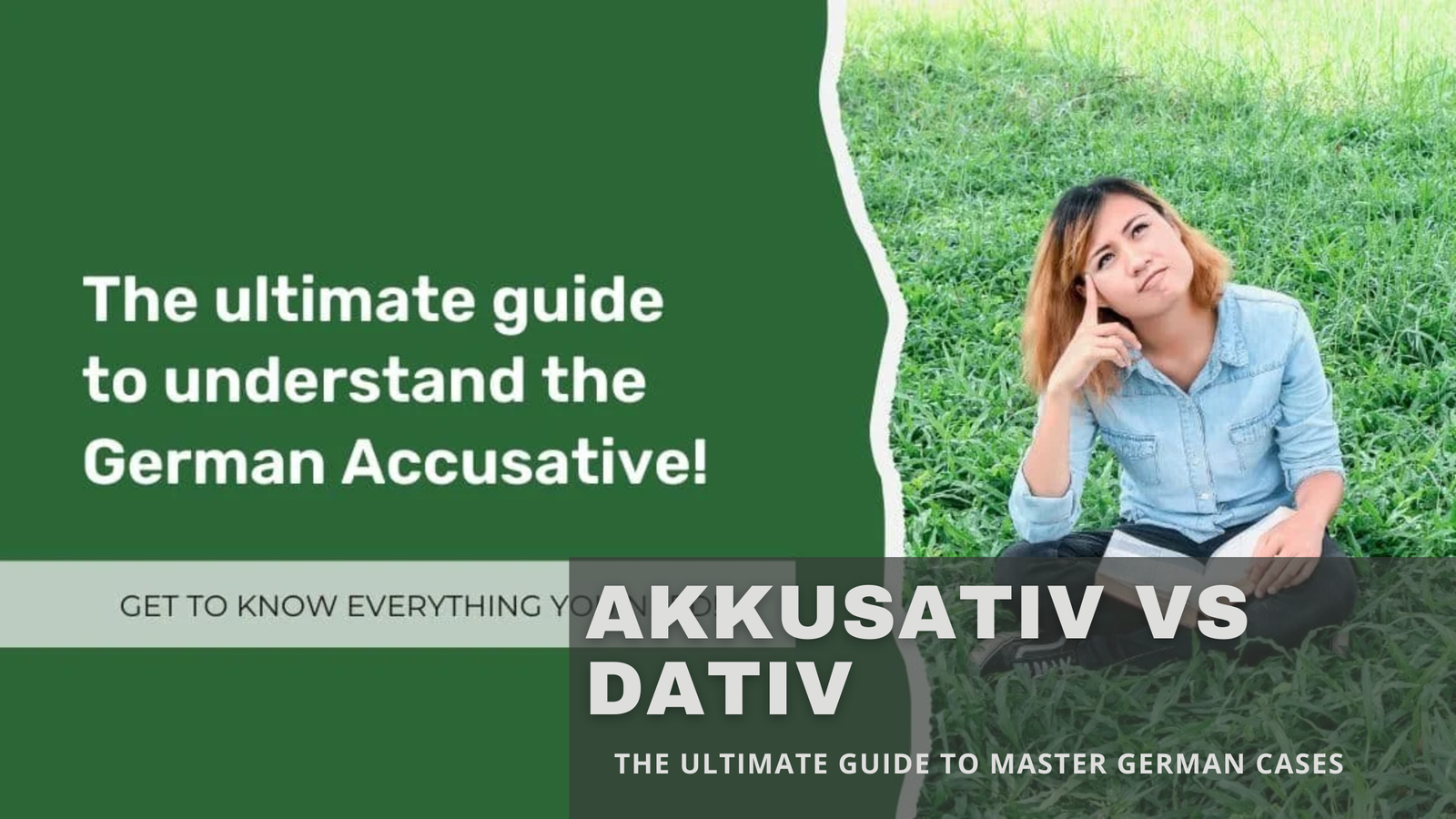
Akkusativ vs Dativ: If you are learning German you will see that the one topic that confuses everyone is Akkusativ, vs Dativ. I have seen many learners get stuck on Akkusativ, vs Dativ.
Even a confident learner. Thinks about mir or mich, dem or den and einem or einen. The learner must choose the form, for the sentence.
Do not worry. I have seen that when you understand the logic, behind cases the German cases start to fit. The guide helps you understand Akkusativ, vs Dativ. The guide provides examples the guide lists rules. The guide gives explanations.
🔍 I want to know what Akkusativ is. I also want to know what Dativ is.
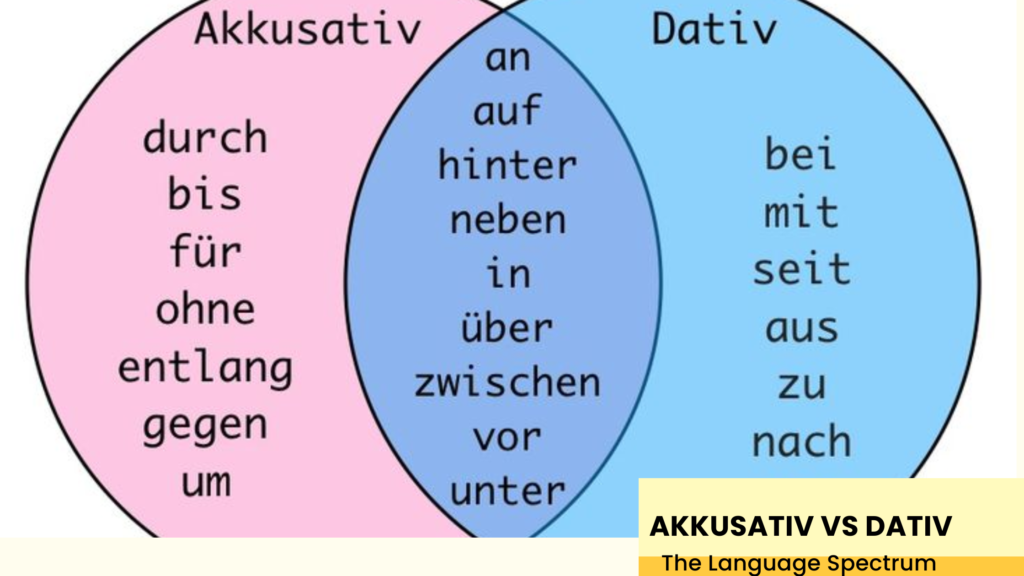
In German cases tell the function of a noun or pronoun. Cases tell how a noun or pronoun works, in a sentence.
👉 Akkusativ (Accusative Case)
Used for the direct object — the person or thing directly affected by the action.
Example:
Ich habe einen Apfel.
I have an apple.
👉 Dativ (Dative Case)
When you write a sentence you use the object. The indirect object is the person who receives something or who benefits from something.
Example:
Ich gebe dem Mann den Apfel.
(I give the man the apple. The man holds the apple.)
🧠 Simple Rule to Remember
👉 Akkusativ = What or whom?
👉 Dativ = To whom / for whom?
When you understand the logic the Akkusativ, vs Dativ becomes easier. I have found that the Akkusativ, vs Dativ becomes much easier after I learned the logic.
🧾 Akkusativ vs Dativ with Examples
Sentence Akkusativ Dativ
Ich sehe den Hund den Hund –
Ich gebe dem Kind einen Ball einen Ball dem Kind
Er hilft dem Mann – dem Mann
Wir kaufen einen Tisch einen Tisch –
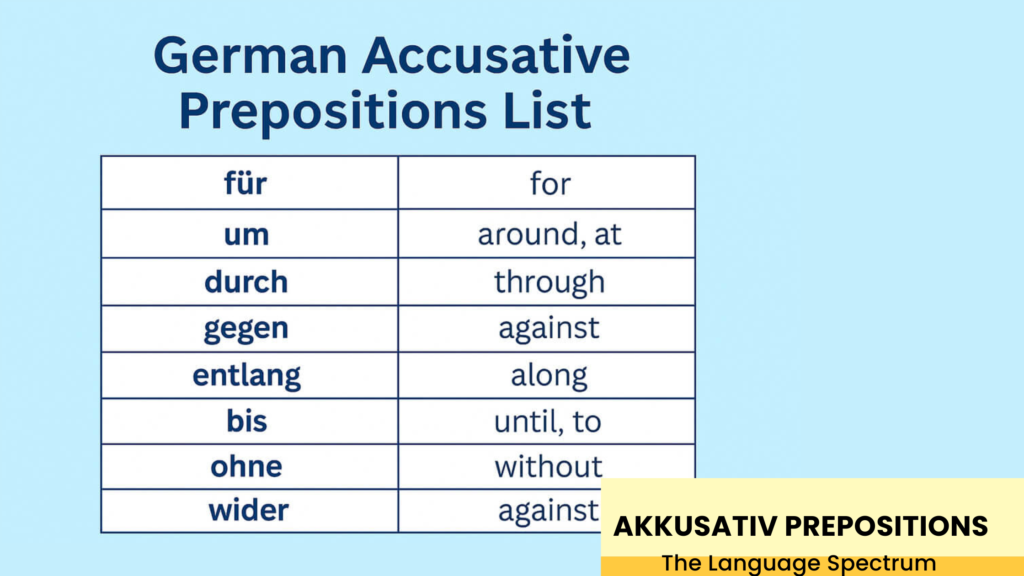
🧩 Akkusativ Prepositions
Some prepositions always take the Akkusativ case:
durch (through)
für (for)
gegen (against)
ohne (without)
um (around)
Example:
Ich gehe durch den Park.
🧩 Dativ Prepositions
I notice that some prepositions always take Dativ.
mit (with)
nach (after/to)
bei (at)
von (from)
zu (to)
Example:
Ich fahre mit dem Bus.
Read More: German Learning Classes: Best German Learning Program in Delhi
🔄 Two-Way Prepositions (Akkusativ or Dativ)
The prepositions can take either case. The prepositions depend on movement or position:
an, auf, in, unter, über, vor, zwischen
Movement → Akkusativ
Ich gehe in das Zimmer.
Position → Dativ
Ich bin in dem Zimmer.
🧠 Common Akkusativ vs Dativ Mistakes
❌ Ich helfe den Mann.
✅ Ich helfe dem Mann.
❌ Ich gehe mit den Bus.
✅ Ich gehe mit dem Bus.
Learning these patterns is key to mastering Akkusativ vs Dativ.
❓ FAQs – Akkusativ vs Dativ
- What is the difference between Akkusativ and Dativ?
Akkusativ shows the object. Dativ shows the object. I use this rule when I study German. - I am stuck. I need a way to remember the Akkusativ and the Dativ.
Ask “what?” for Akkusativ and “to whom?” for Dativ. - I am curious, about prepositions that always take the Dativ case.
Yes — mit, nach, bei, von, zu, aus, seit. - Which is harder: Akkusativ or Dativ?
I see many learners find Dativ harder. Dativ changes case and Dativ uses prepositions. - I am trying to learn Akkusativ, vs Dativ. How can I learn Akkusativ, vs Dativ quickly?
Practice every day because regular practice builds skill. Speak out loud during practice. Use real life examples during practice. Get guidance, from the teacher during practice.
Read More: German Grammar Training: 10 Sentences Which Feels Illegal to Know
TLS helps you master the Akkusativ and the Dativ. I have tried TLS. I see how TLS makes the Akkusativ and the Dativ clear. The difference, between the Akkusativ and the Dativ becomes easy, with TLS.
At The Language Spectrum (TLS) The Language Spectrum (TLS) simplifies grammar using:
✔ Real-life examples
✔ Speaking-based practice
✔ Visual explanations
✔ Daily usage patterns
Students learn when to think. Students learn when to feel the grammar naturally.
🔚 Final Thoughts
I realized that understanding Akkusativ, vs Dativ was a turning point in the learning journey. When Akkusativ, vs Dativ clicks sentence building feels smoother, clearer more confident.
I practice regularly. I get the guidance. German grammar becomes logical. German grammar does not feel scary.
Redefine Fluency. Learn German the smart way.